
Are you using ChatGPT only to ask short questions like “Tell me about AI” or “Write a paragraph on climate change”? If so, you are just scratching the surface of what this powerful AI tool can do. In this blog post, we’ll guide you step-by-step on how to write ChatGPT prompts — from basic to advanced — so you can generate professional-level content, conduct deep research, and even create stunning AI-generated images.
This guide is specially written for beginners and casual ChatGPT users who want to level up. Whether you’re a blogger, content creator, marketer, designer, or just a curious learner — this post will unlock your full potential with AI prompting.
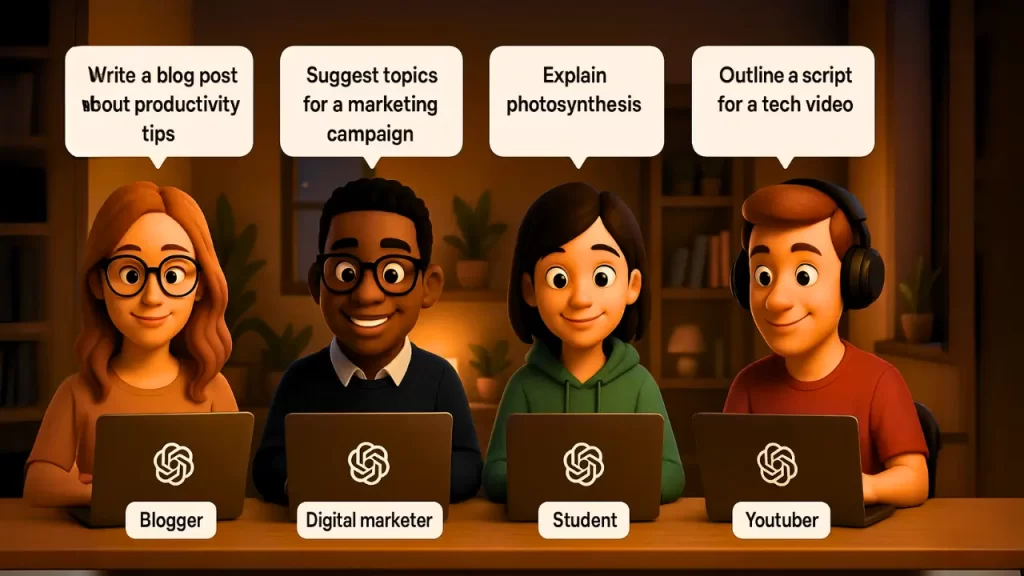
🔹 What is a Prompt in ChatGPT?
A prompt is simply the message, question, or instruction you give to ChatGPT. It’s how you communicate what you want the AI to do.
Example:
- “Write a poem about nature” is a simple prompt.
- “Act like a poet from the 1800s and write a romantic poem about a sunset in the forest using metaphors and old-style language” is an advanced prompt.
The more detailed and purposeful your prompt, the more specific and useful the output becomes.
🔶 Why Writing Better Prompts Matters
Writing better prompts leads to:
- Higher quality outputs
- Faster, more accurate answers
- Creative and professional results
- Less editing or follow-up questions
Whether you’re creating content, solving problems, or brainstorming ideas — better prompts save time and improve quality.
🕐 Step-by-Step: Writing Basic to Advanced Prompts
Let’s walk through levels of prompting using examples. We’ll start from basic and gradually go deeper.
🟢 Level 1: Basic Prompt
Prompt:
“Write about the benefits of meditation.”
What You Get:
- A generic, short answer
- May lack depth or structure
🔵 Level 2: Add Clarity and Audience
Prompt:
“Write a blog introduction (100 words) about the benefits of meditation for beginners.”
Improvements:
- Clear format (blog intro)
- Targeted audience (beginners)
- Word count guidance
🔶 Level 3: Assign a Role to ChatGPT
Prompt:
“Act like a certified yoga instructor. Write a blog introduction (100 words) about the benefits of meditation for beginners.”
Why It Works:
- Setting a role gives ChatGPT context and tone
- The content becomes more personalized and credible
🔴 Level 4: Add Structure and Tone
Prompt:
“Act like a certified yoga instructor. Write a friendly, motivational blog post (700+ words) with sections, headings, and bullet points, explaining 5 key benefits of meditation for beginners.”
Result:
- Full blog content
- Structured layout (H2, bullet points)
- Clear, human tone
📗 Advanced Prompt Formula
Here’s a formula you can use for most tasks:
[Instruction] + [Role] + [Goal] + [Context] + [Constraints] + [Output Format]
Example:
“Write a 1000-word blog post as a tech content writer, explaining the top 5 AI tools for freelancers in 2025. Include pros, cons, pricing, and links. Use an engaging tone for a global audience. Format with H2s, bullet points, and a short summary at the end.”
🌐 Blog Writing Prompt Examples
Here are prompt templates you can reuse:
✉️ Beginner Blog Post
“Write a 700-word blog in simple English about how to stay productive while working from home. Include 5 tips with examples.”
📅 SEO Blog Prompt
“Act like an SEO expert. Write a 1000-word SEO-optimized blog post about the best free AI tools for students in 2025. Include meta description, headings, and a list of tools with download links.”
🔐 Affiliate Blog Prompt
“As a content marketer, write a blog post promoting Grammarly vs ProWritingAid. Include a comparison table, pros/cons, pricing, and which is better for students.”
🎨 Image Generation Prompts (with Examples)
ChatGPT can help you write prompts for tools like DALL·E, Midjourney, or Leonardo AI to create realistic or artistic images.
🌳 Nature + Human (Simple)
“A young woman sitting on a rock by a river during sunset, surrounded by trees, peaceful expression, cinematic lighting.”
🌟 Nature + Human (Advanced)
“Create a photorealistic image of a woman in a green dress standing in a flower field at golden hour, with butterflies flying around her, soft lens flare, DSLR-quality, peaceful expression, 4K resolution.”
🌿 Nature Alone (Fantasy Style)
“A glowing enchanted forest at night, with floating fireflies, magical blue mist, and ancient trees with twisted roots, fantasy style, ultra detail.”
📊 Comparison Table: Basic vs. Advanced Prompt
| Type | Prompt | Expected Output |
|---|---|---|
| Basic | “Write about time management” | Short, generic tips |
| Intermediate | “Explain time management tips for university students” | More focused content |
| Advanced | “Act like a productivity coach. Write a 1000-word article on time management techniques for university students, including examples, bullet points, and morning routines.” | Structured, useful, audience-specific content |
📖 Use Cases by Industry
| Field | Advanced Prompt Idea |
| Blogging | “Act like a tech blogger. Write a 1200-word post on how AI is changing content creation in 2025, with stats, tools, and predictions.” |
| Social Media | “Generate 10 witty Instagram captions for a rainy day in New York City.” |
| YouTube | “Write a full YouTube video script (3 mins) reviewing the top 3 free video editing software for beginners.” |
| E-commerce | “Act as a product marketer. Write 3 ad headlines and product descriptions for an eco-friendly water bottle.” |
💡 Pro Tips to Write Better Prompts
- Always specify the role of ChatGPT (teacher, blogger, coder, etc.)
- Mention the target audience (kids, beginners, professionals, etc.)
- Set clear format expectations (bullets, tables, headings)
- Use descriptive words (professional, emotional, cinematic, etc.)
- Give length or word count guidance
- Tell it to be SEO-friendly, if needed
✅ Conclusion
Writing good prompts is a skill — and just like any skill, it improves with practice.
Whether you’re writing blogs, generating AI images, or doing research, learning to write clear, specific, and advanced prompts will help you unlock the full potential of ChatGPT and other AI tools.
Start small, improve your prompt with structure, audience, and output in mind — and soon you’ll be creating professional-quality content in minutes!
📍 Liked this guide? Visit onlinor.com for more AI content creation tips, tutorials, and prompt templates.