
The iPhone 18 series is shaping up to be one of Apple’s most ambitious updates in recent years, with whispers of groundbreaking features like under-display Face ID, a variable aperture camera, and even a foldable model. As we enter 2026, leaks from trusted analysts such as Ming-Chi Kuo, Mark Gurman, and Ross Young are painting a clearer picture of what to expect. While Apple keeps its cards close, these rumors—sourced from supply chain reports and industry insiders—offer reliable insights into the device’s timeline, design, and tech upgrades.
In this in-depth guide, we’ll break down the most credible iPhone 18 leaks, focusing on accuracy and detail. Whether you’re an Apple enthusiast planning your next upgrade or just curious about future tech, we’ll explain complex terms (like “variable aperture,” which means a camera lens that adjusts its opening size for better light control) in simple ways. Let’s dive into the details, backed by the latest reports as of January 2026.
iPhone 18 Release Timeline: A Potential Split Launch Strategy
One of the biggest shifts rumored for the iPhone 18 is Apple’s potential move to a split launch schedule, breaking from the traditional all-in-one September reveal. According to Bloomberg’s Mark Gurman and supply chain analyst Ming-Chi Kuo, Apple might release the premium models first to capitalize on holiday sales, while delaying entry-level ones.
- iPhone 18 Pro and Pro Max: Expected in fall 2026, likely September. This aligns with Apple’s usual pattern for high-end devices, allowing time to showcase advanced features like enhanced AI and camera tech.
- Standard iPhone 18 and iPhone 18e (or budget variant): Pushed to spring 2027, possibly February or March. This “e” model could be a more affordable option, similar to past SE lines, with simplified specs.
- iPhone 18 Fold (or foldable iPhone): Slated for fall 2026 alongside the Pros. Analyst Jeff Pu from Haitong International Securities suggests this could boost Apple’s sales by up to 95 million units in 2026, thanks to the novelty of a foldable design.
This strategy makes sense for production efficiency—Applecan prioritize complex Pro hardware while refining base models. However, if supply chain issues arise (as seen in past years with chip shortages), the full lineup might stick to a single fall launch. Recent updates from 9to5Mac in January 2026 confirm suppliers are testing production for this split plan, with base model assembly starting mid-February.
Design and Display Innovations: Toward a Sleeker, More Immersive Screen
Design rumors point to evolutionary changes, with the Pro models leading the charge toward a nearly bezel-less experience. Display expert Ross Young, known for accurate predictions on screen tech, has been vocal about these upgrades.
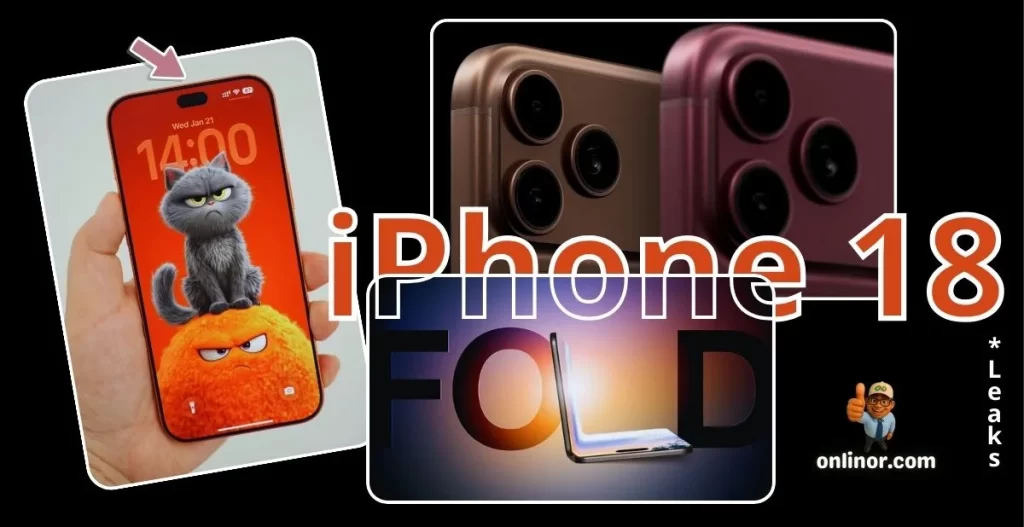
- Under-Display Face ID: A standout feature for the iPhone 18 Pro and Pro Max. This tech hides the Face ID sensors beneath the screen, reducing or eliminating the notch-like Dynamic Island. Young notes that Apple has solved embedding challenges, but the front-facing camera might stay visible as a small hole-punch. This could make the display feel truly edge-to-edge, ideal for video watching or gaming.
- Smaller Dynamic Island: If not fully removed, the Dynamic Island (that pill-shaped cutout at the top for notifications and controls) could shrink by about 35%, down to roughly 13.5mm wide, per leaks from Ice Universe and MacRumors. Some reports suggest it might relocate to the top-left corner for a cleaner look.
- Foldable Design: The iPhone 18 Fold is rumored as a book-style device, unfolding to a 7.6-7.8-inch inner screen and featuring a 5.3-inch outer display. Materials include titanium and aluminum for durability, with a hinge designed to minimize creases. Thickness? Around 4.5-4.8mm when open, doubling to 9mm folded—thinner than competitors like Samsung’s Galaxy Z Fold.
- Other Design Tweaks: All models may get a 24-megapixel front camera (up from 12MP in older iPhones), brighter displays with advanced LTPO tech for better battery life and refresh rates, and new colors like burgundy or coffee-brown. The Pro Max might be slightly thicker for a larger battery.
These changes aim to blend aesthetics with functionality. For beginners, think of under-display tech as making your phone’s screen “invisible” for sensors— no more black bars interrupting your view. Experts will appreciate the efficiency gains from 2nm manufacturing processes in the displays.
Camera Upgrades: Professional-Grade Photography on the Go
Apple’s cameras have always been a highlight, and the iPhone 18 Pro series could take it further with hardware that’s a first for iPhones.
- Variable Aperture Lens: Exclusive to the Pro models (possibly just the Pro Max), this allows the main 48-megapixel camera to adjust its lens opening mechanically. In simple terms, it means sharper low-light shots and customizable background blur (bokeh) without relying solely on software. Ming-Chi Kuo first reported this in late 2025, and recent supply chain leaks from Samsung’s Austin plant confirm U.S.-made sensors starting production in March 2026.
- Sensor Improvements: A new three-layer stacked sensor from Samsung could reduce noise, boost dynamic range (better handling of bright and dark areas in photos), and improve responsiveness. The rear setup includes a 48MP main, ultra-wide, and telephoto lenses, with larger apertures for enhanced night photography.
- Foldable Camera: Dual rear cameras (48MP main and ultra-wide, no telephoto) on the Fold, plus a 24MP under-display front camera inside— a world-first for high-res hidden cams. The outer screen gets a hole-punch selfie camera.
Practical insight: If you’re a photography hobbyist, variable aperture could rival DSLR cameras for creative control. For everyday users, it means better family photos in dim lighting without flash. Reports from AppleInsider and 9to5Mac in January 2026 reinforce these as “solid” leaks, with no major contradictions.
Processor and Performance: The A20 Chip Powers AI and Efficiency
At the heart of the iPhone 18 is the A20 chip, Apple’s next-gen processor built on TSMC’s cutting-edge 2nm process node.
- A20 and A20 Pro Variants: The Pro models and Fold get the A20 Pro, offering 15-30% better speed and efficiency than the A19. This translates to longer battery life (up to 5,800mAh on the Fold) and smoother multitasking. Wafer-Level Multi-Chip Module (WMCM) integrates RAM for faster AI processing.
- RAM Boost: All models, including the base iPhone 18, could feature 12GB of RAM—up from 8GB in current devices—enabling more on-device Apple Intelligence features like advanced Siri with large language models (LLMs).
- Connectivity: An in-house C2 modem for faster 5G (including mmWave), Wi-Fi 7 chip, and eSIM-only on the Fold (no physical SIM slot).
For context, 2nm tech packs more transistors into a tiny space, making the chip “smarter” without draining power. This is crucial for AI tasks, like real-time photo editing or voice commands. Jeff Pu’s January 2026 investor note details these specs, noting higher costs (50% more per chip) but unchanged retail prices.
Other Notable Features and Considerations
Beyond the core upgrades, leaks hint at biometrics and ecosystem integration.
- Biometrics: Pro models stick with Face ID (under-display), while the Fold uses Touch ID in the power button due to space constraints—no Face ID here.
- Apple Intelligence Enhancements: Expect deeper Siri integration with LLMs, possibly debuting in spring 2027 alongside base models.
- Pricing and Availability: Starting at around $999 for the base iPhone 18, with the Fold at $1,999. No major price hikes expected.
Keep in mind, these are leaks—Apple could tweak features based on testing. For instance, early 2025 rumors of a fully bezel-less screen have quieted due to tech hurdles.
Conclusion
The iPhone 18 series promises to redefine smartphones with its split launch, under-display tech, and foldable innovation, drawing from reliable sources like Kuo, Gurman, and Young. If you’re eyeing an upgrade, the Pro models in fall 2026 look like the sweet spot for cutting-edge features. Stay tuned for official announcements, as Apple often surprises. In the meantime, these details offer a solid glimpse into the future of mobile tech—exciting times ahead!
References/Sources
- MacRumors: iPhone 18 Roundup (January 2026).
- 9to5Mac: iPhone 18 Guides and Leaks (January 2026).
- AppleInsider: iPhone 18 Rumors and Specs (January 2026).
- Additional reports from Ming-Chi Kuo, Mark Gurman, Ross Young, and Jeff Pu via Bloomberg, Haitong Securities, Ice Universe, and supply chain analyses.
Thank You for Reading 💙
Thank you for spending time with Onlinor.
If this guide helped you, explore more practical tech guides on our website.
🌐 Visit: https://onlinor.com
📺 YouTube: Onlinor — real, practical software and digital skills for everyday users.